
Why do you need cable heating systems for the roof? Where exactly are they mounted? How is the heating cable arranged and what is it like?
Let's figure it out.
Installation goals
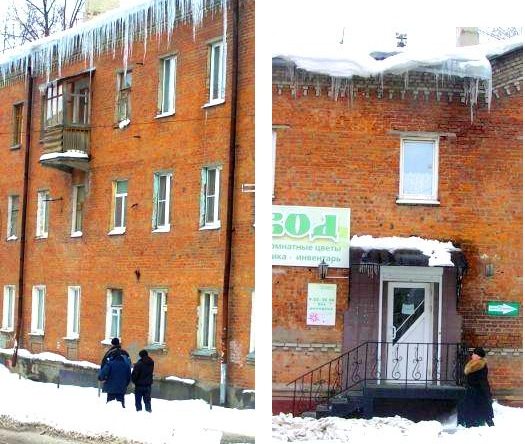
Why do roofs need to be heated? Obviously, not to make the house warmer. The goal is to get rid of icing on the roof and gutter system.
Why is ice dangerous?
- Icicles on the edge of the roof are a potential danger to passers-by and vehicles. The fall of a pointed piece of ice from a height of one or two dozen meters clearly does not bode well for someone who is standing below.
- A frozen drain during a thaw will provide a dam for water, which will flow under the inclined elements of the roof - slate or tiles. The result is a flooded attic and decay truss system.
Please note: non-working gutters are also dangerous for flat roofs.
Water fills the pores and cracks of soft roofs and joints between concrete U-shaped gutters.
Freezing there and expanding at the same time, it provokes the appearance of new leaks that will remind themselves when the snow melts and in the rain.
- Finally, the mass of ice is often too large to support the drain.. His fall means again a danger to passers-by; in addition, recovery roof drainage system is a rather costly undertaking.
There are two reasons for icing roofs and gutters.
- Thaws and off-seasons are characterized by the fact that the temperature can rise above and fall below zero during the day.. As a result, the snow that melted during the day turns into ice in the evening.
- The so-called warm "roofs"«. Within the framework of the topic we are discussing, this term does not mean good thermal insulation, but quite the opposite - large losses through the roof pie. This picture is typical for exploited attics and mansards: snow can melt on the roof at an ambient temperature of up to -10 degrees.
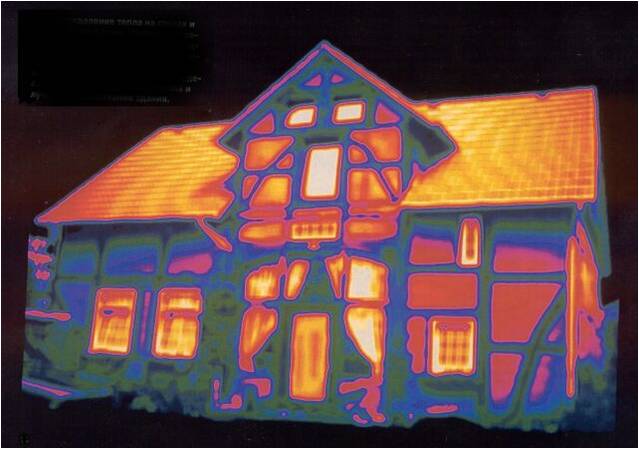
In both cases, cable heating of the roof solves the problem completely; however, the cable power density requirements are slightly different.
Cable types
If we neglect minor differences and highlight the key ones, then the roof heating cable can be divided into two main categories:
- Resistive.
- Self-adjusting.
Of course, the definitions are not medically accurate: a self-regulating cable also uses the principle of heating a conductor with high resistivity (resistor) when an electric current passes through it. However, first things first.
resistive
Actually, the design of this heating element is as simple as a moo: a conductive core (or two cores) is soldered into insulation made of plasticized polyvinyl chloride.
Optionally, there may be:
- A layer of additional insulation with improved strength characteristics (fluoroplastic, fiberglass, etc.).
- A layer of copper braid or aluminum foil that performs the function of electromagnetic shielding. A single-core conductive cable laid in a snake is a source of electrical inductance induced in any circuits, which is contraindicated in any household appliances.
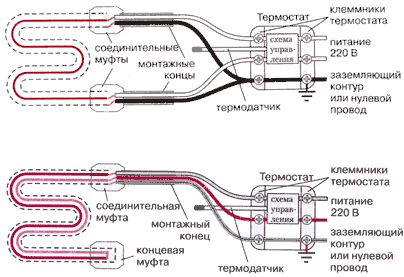
The price of a running meter of such a cable is low - from 80-90 rubles; however, it has a number of rather unpleasant features:
- There is no mention of any energy savings. When power is applied, the entire heating circuit always operates at full capacity.
- An overlap due to a broken fastening will most likely lead to overheating of the cable and a violation of its insulation: the current-carrying cores will generate more heat than convection and infrared radiation can take away.
- A two-core cable is selected according to the length and total power for a specific task: it cannot be cut, since both cores are a closed circuit.It will not be easy to splice the cut cable again and ensure the tightness of the connection.
In principle, it is possible to cut a single-core, but even here we are in danger: the shorter the length of the conductor that closes zero and phase, the lower its total resistance, which means the greater the current flowing through it. By shortening the heating element too much, we get guaranteed overheating and failure, not to mention the excessive consumption of electricity.
self-adjusting
The self-regulating roof heating cable is an exceptionally elegant solution to all of these problems. It is not the current-carrying cores that produce heat in it, but an insert separating them made of a polymer with a high coefficient of thermal expansion, into which a rather large amount of conductive coal dust or other finely dispersed conductor is mixed.
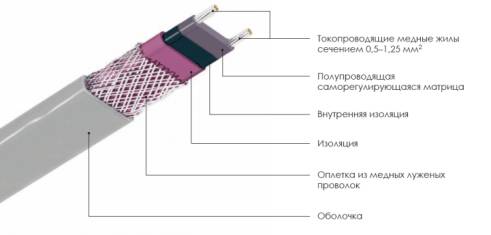
How it works?
- Upon cooling, the linear dimensions of the insert decrease. The coal particles approach each other, as a result of which the resistance of the polymer insert in this particular area decreases. More current begins to flow through it, which naturally leads to heating of the cable.
- When heated, on the contrary, the conductor particles are separated by a greater distance. Resistance increases, current and heating decrease.
The cost of such a cable starts from 250-300 rubles per meter.
Mounting zones
Where are the heating cables installed? Actually, where ice is most undesirable:
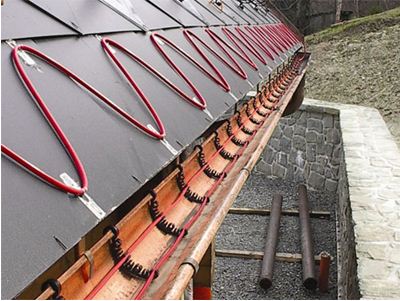
- Along the edge of the roof slope. The cable is laid with a ruler or snake and prevents the growth of icicles.
- In valleys (the so-called internal corners between adjacent slopes). The width of the heated zone in them is usually from 40 to 100 centimeters.
- In drains and gutters.There, the cable prevents the formation of ice and a decrease in the outflow of melt water.
Power
For roofs in areas requiring heating, cable power is calculated based on 250 - 350 watts per square meter.
However: the notorious "warm" roofs are overgrown with frost much more intensively.
For them, a reasonable minimum is 400 W / m2.
The power of the cable for the drain is generally estimated at 30-40 watts / linear meter (with a pipe diameter of up to 20 cm). "Warm" roofs stand apart here too: in their case, it is worth focusing on 50 watts for a plastic drain and 70 for a metal one.
Conclusion
Do not be intimidated by the power ratings given. Roof heating is much more economical than it might seem after reading the description: it works no more than 3 weeks a year; automatic reduction of heating power also significantly reduces costs. As always, you will find additional details in the video in this article. Good luck!
Did the article help you?